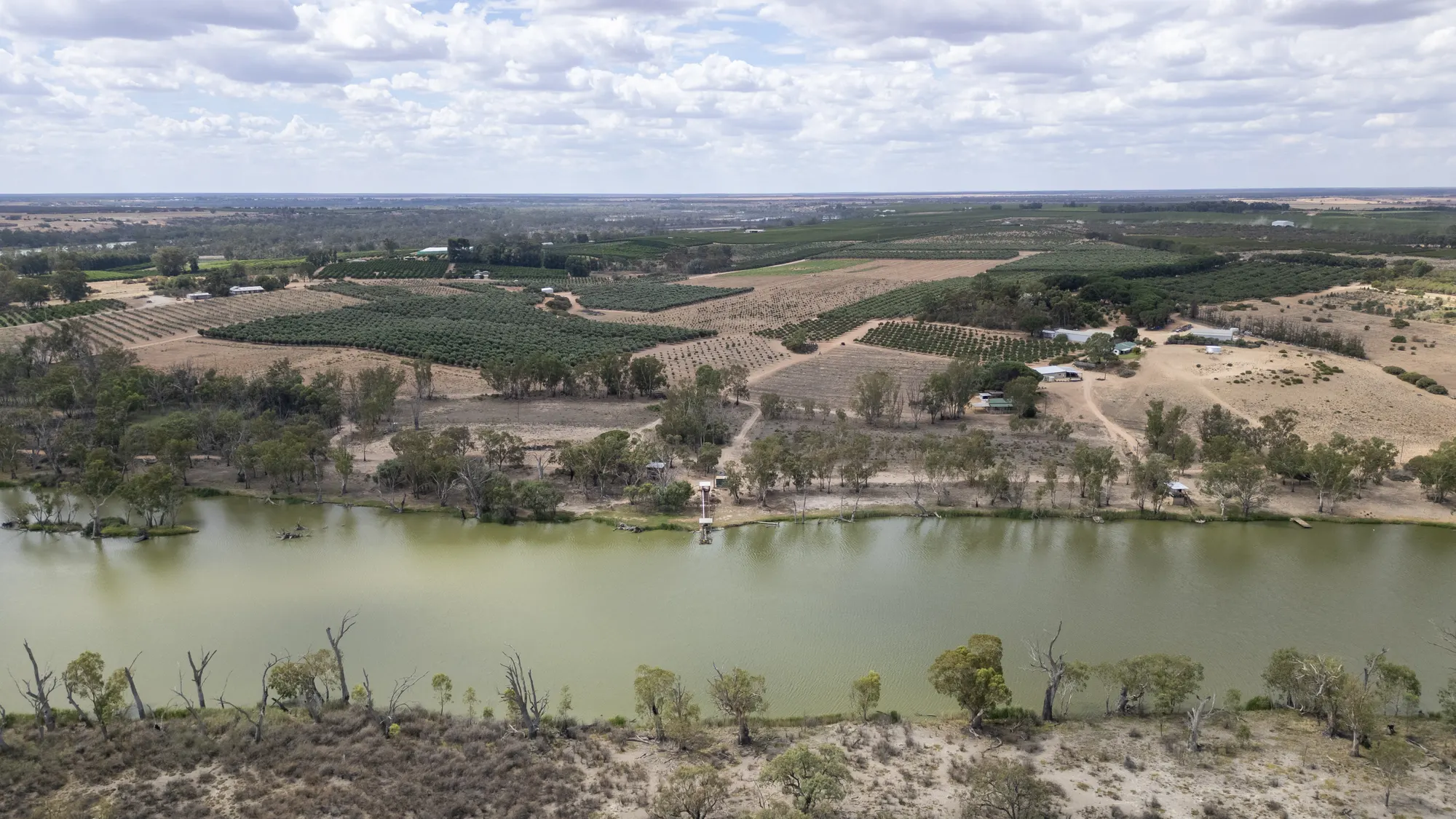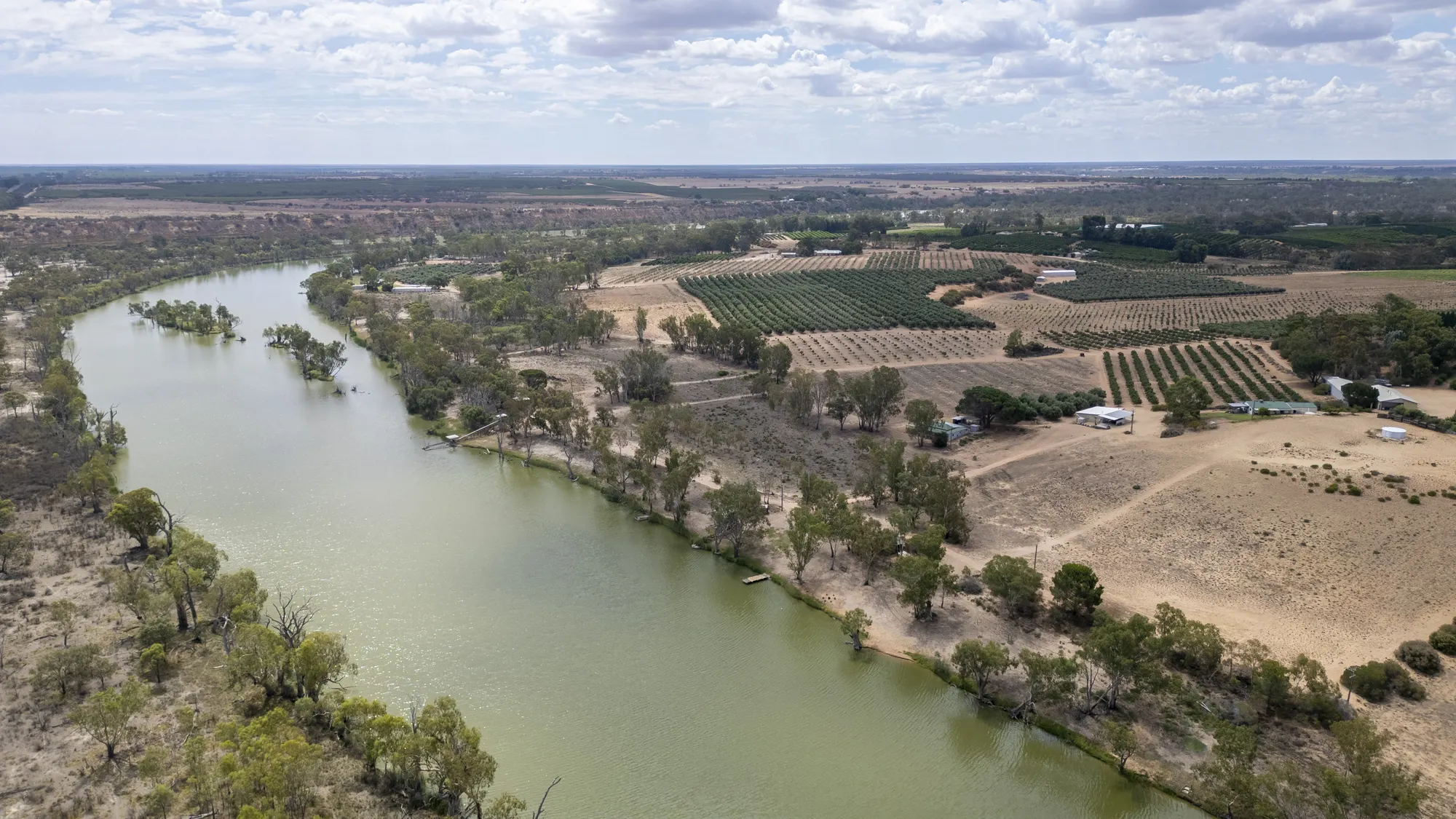
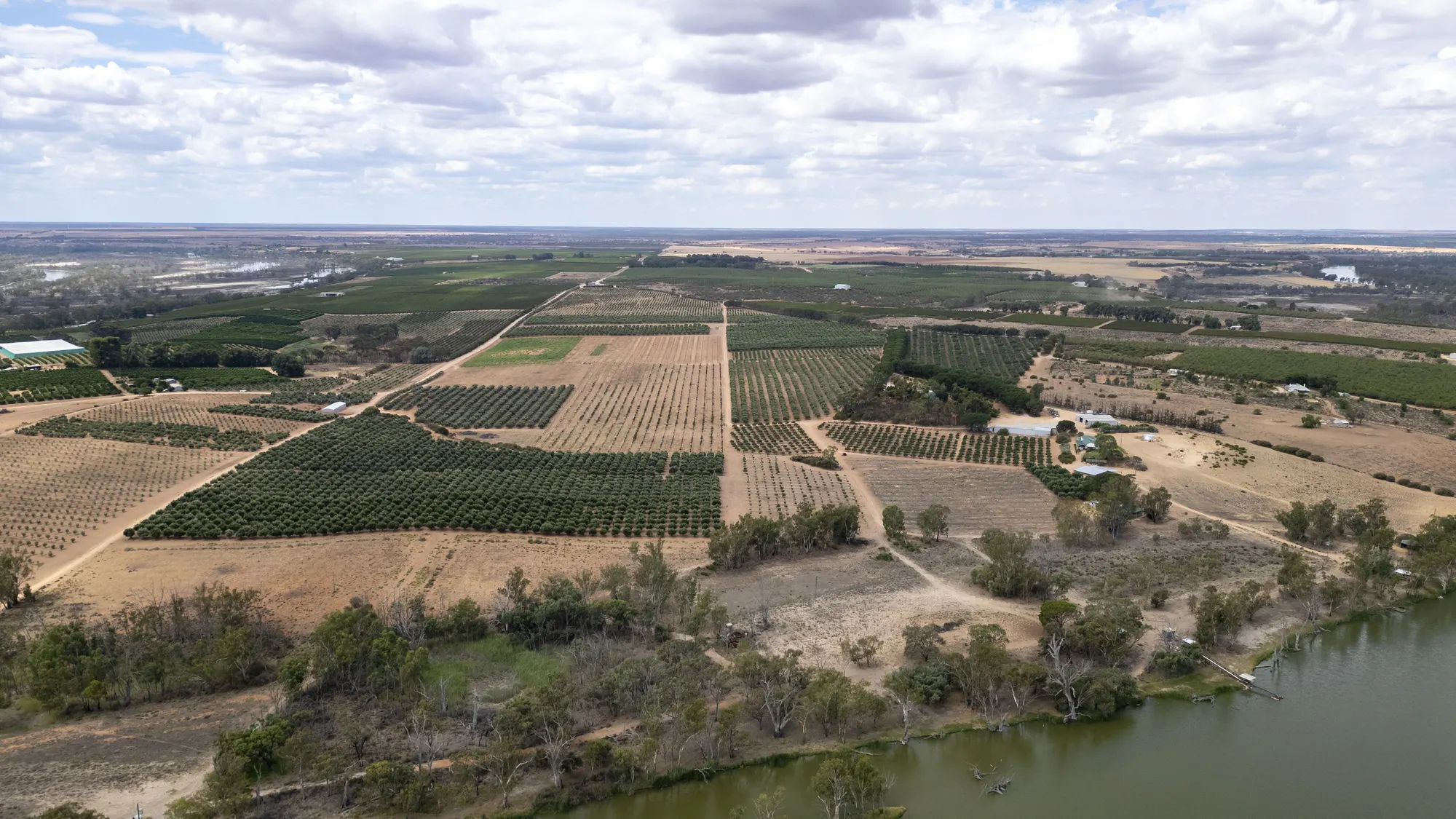
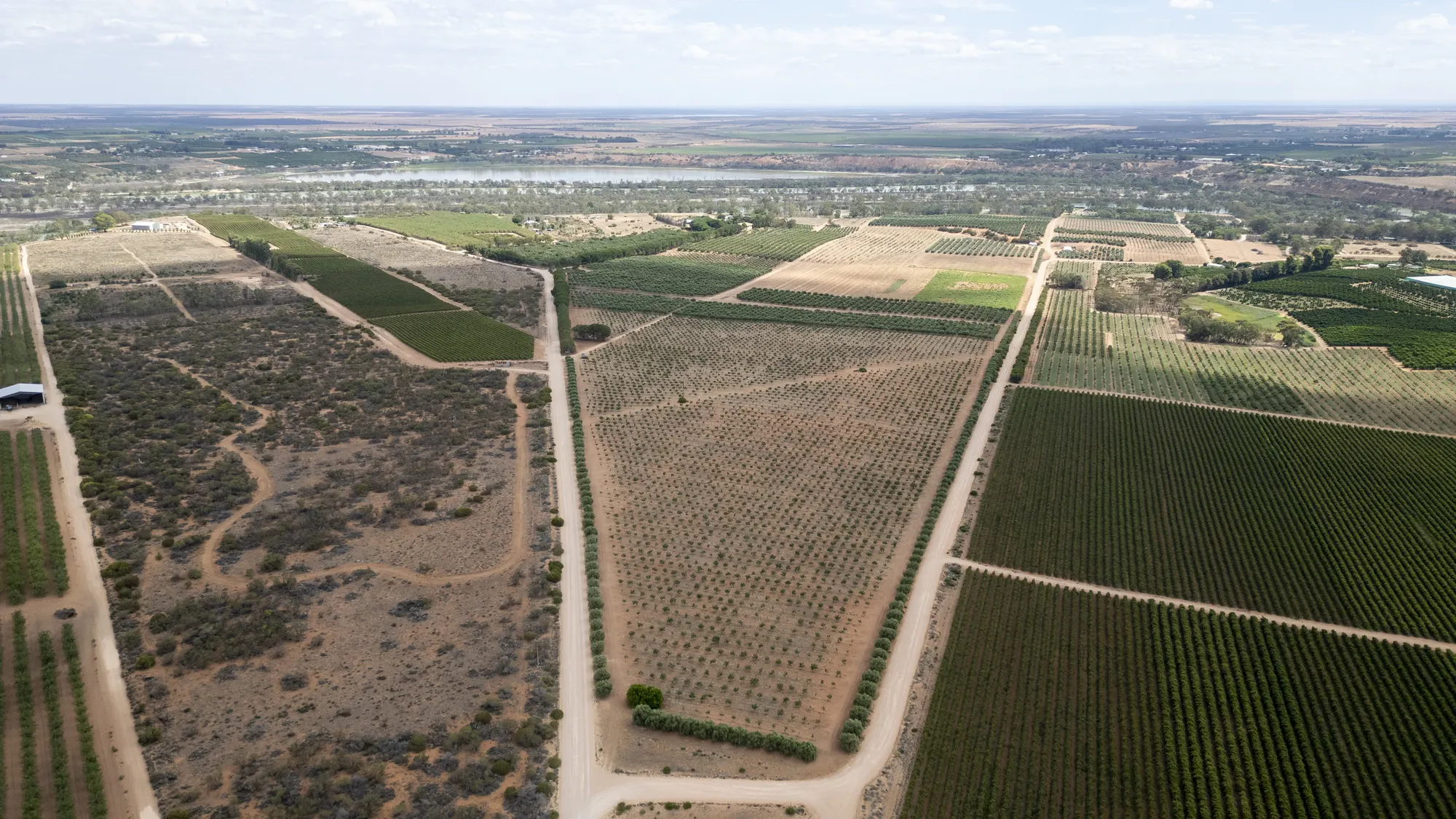
Aerial view over a bend of the River Murray with irrigated orchard blocks and dry ridge country beyond

For Sale by Expression of Interest · Taylorville · South Australia

Established. Productive.
Ready for what comes next.

Lot 60 Hartwig Road — approximately 31.22 hectares (77.15 acres) of River Murray horticulture: commercially producing table olives, pistachios with roughly seven years of establishment behind them, and substantial commercial-grade irrigation infrastructure already in place.

31.22 ha
77.15 acres (approx.)
34 acres
Table olives, producing
38 acres
Pistachios, ~7 years
~5 acres
Unplanted land
Lot 60 Hartwig RoadTaylorville, South Australia

The opportunity

An operating horticultural property, not a project waiting to start

Lot 60 offers a buyer the part that is hardest to buy: the years, the capital and the infrastructure already committed to getting an orchard to this point.

Approximately 31.22 hectares
77.15 acres at Lot 60 Hartwig Road, Taylorville, in South Australia's River Murray horticultural country.
Established commercial table olives
34 acres of established table olives in commercial production, with current wholesale-market channels and a potential whole-crop purchaser relationship.
38 acres of pistachios at roughly seven years
The establishment years are behind the orchard — industry guidance places productive stage around year seven.
Commercial-grade infrastructure
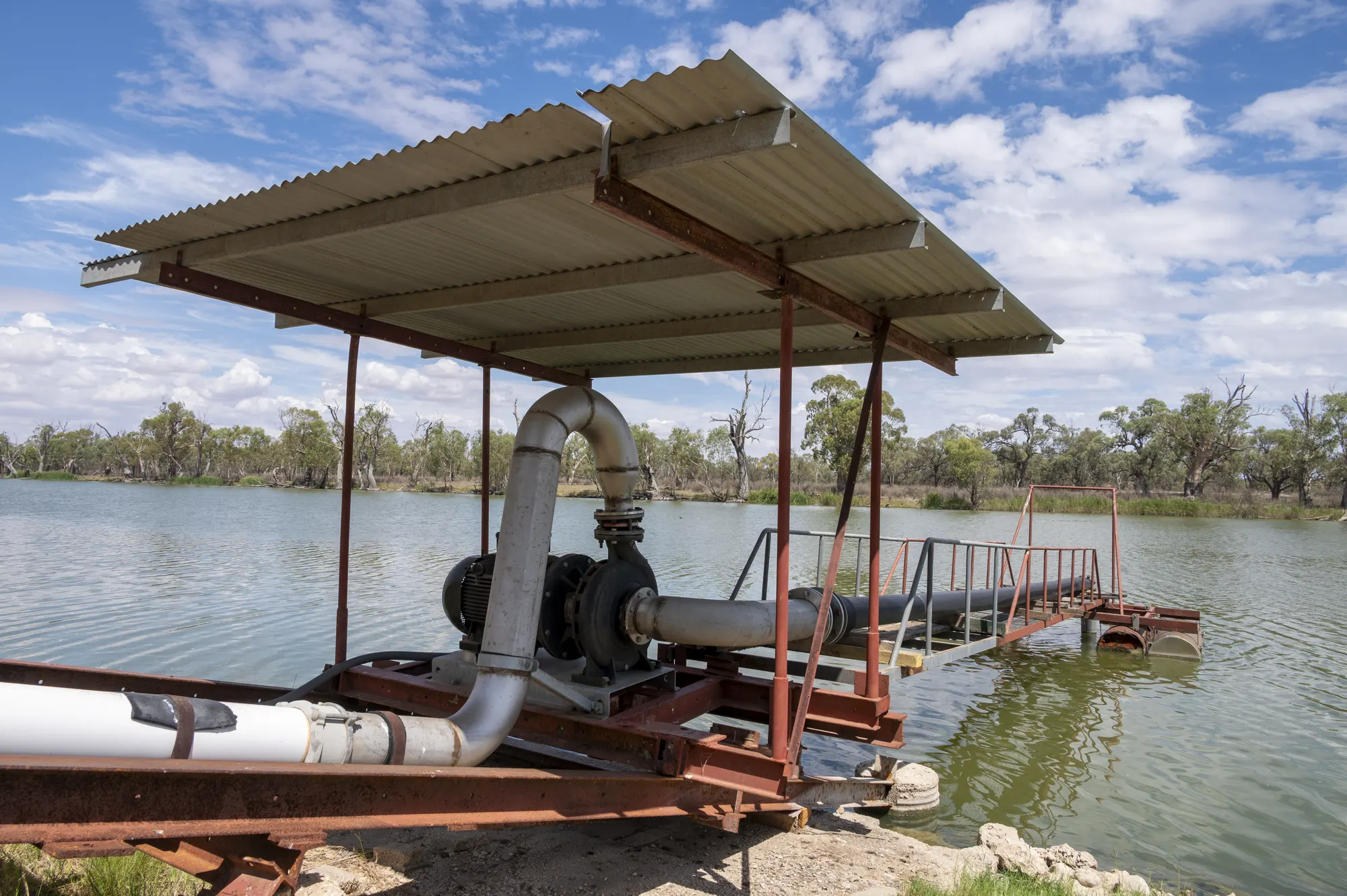
Big Toolunka Creek pumping station, mains power, backup generator, filtration, fertigation, metering, sprinkler irrigation and drip irrigation.
Approximately 5 acres unplanted
Flexibility for further planting, shedding or a future residence — subject to planning, building and all other required approvals.
A genuine retirement sale
The long-standing owner is stepping back after decades in horticulture.
Broad aerial showing orchard blocks, open land and the River Murray corridor
River Murray frontage country at Taylorville.
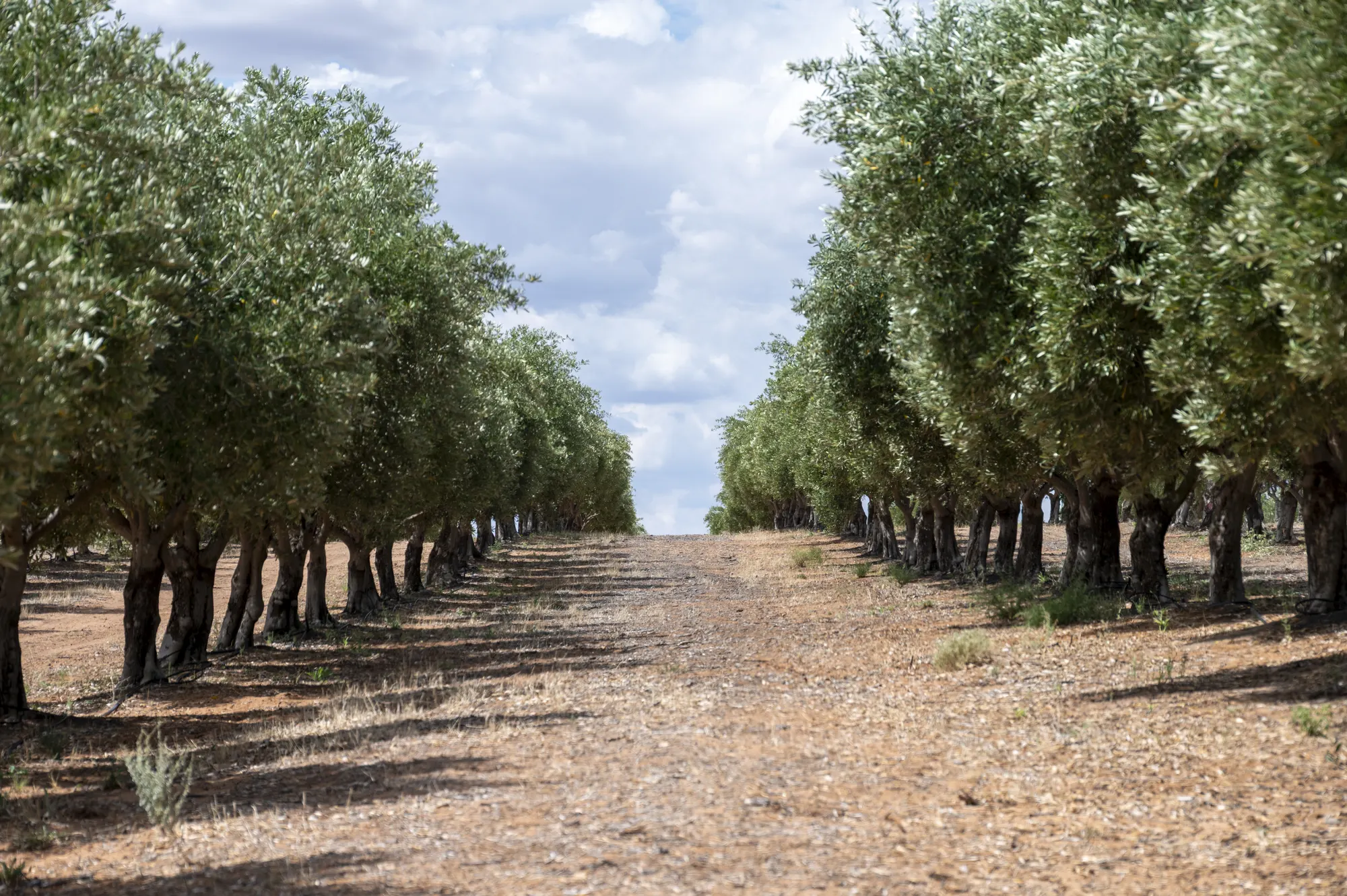
Avenue between rows of mature table olive trees
Mature table olive rows under drip irrigation.

Table olives

An established commercial producing crop

The approximately 34-acre table-olive block is established and in commercial production. Detailed financial information is reserved for genuine, qualified buyers.

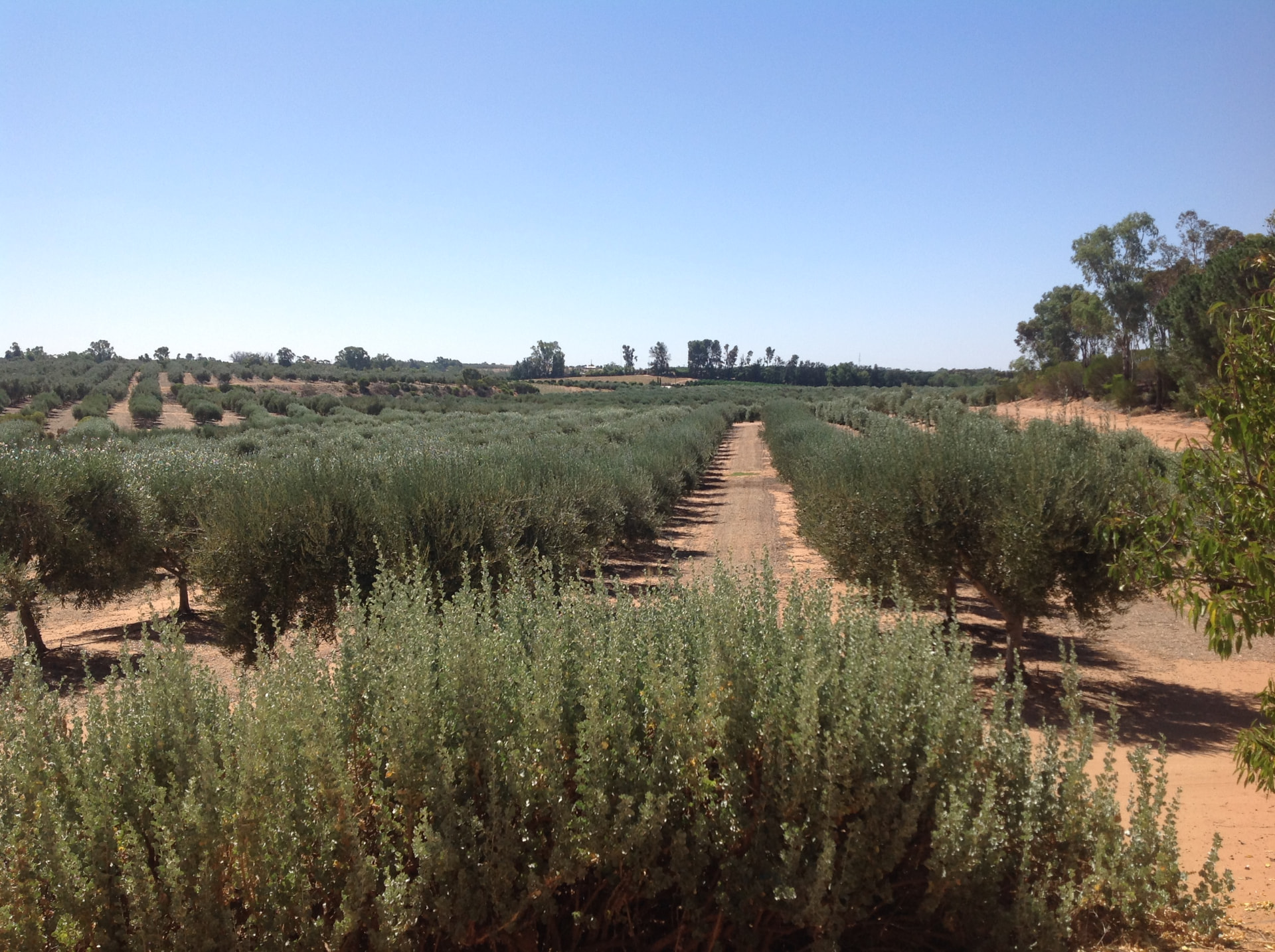
Wide view of the established table olive grove with a central access row running through the orchard
Established table olive grove across the property.
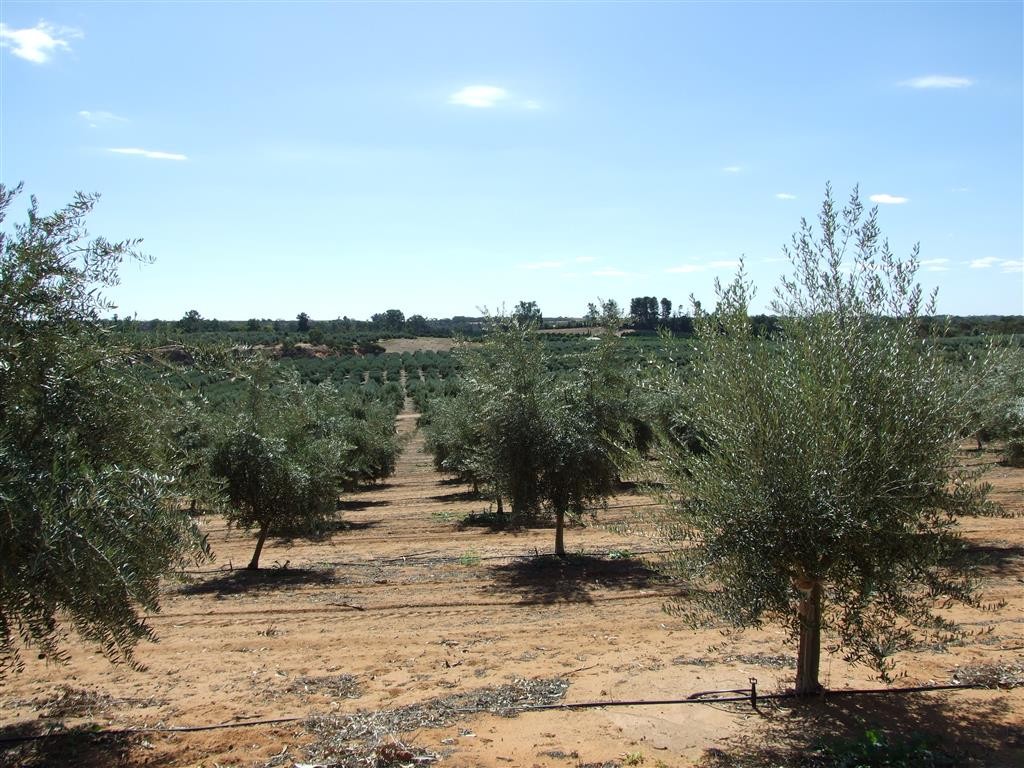
Looking down the rows of productive table olive trees in the orchard
Productive table olive rows within the orchard.

An existing crop purchaser relationship

Most of the current crop is marketed through the Sydney and Brisbane wholesale markets. UniSA has indicated it is willing to enter into a long-term purchase contract for table olives from this property, subject to agreed commercial terms and documentation. UniSA is also meeting with and approaching other growers about expanding table-olive production under long-term supply arrangements.

Vendor-supplied planting schedule

The vendor has provided a photographed planting schedule for the table-olive block, totalling approximately 34 acres and described as 30+ years old. Approximate tree counts shown:

  • Kalamata1,600 trees
  • Wallis1,100 trees
  • Manzanillo340 trees
  • Uclua500 trees
  • Olive oil variety94 trees
  • Total olives3,634 trees

The specific olive-oil cultivar is not named in the supplied schedule. Tree counts are vendor-supplied and should be treated as approximate. No yield or revenue is implied.

Vendor-advised market context: current market prices for table olives are approximately $5–$8 per kilogram, depending on season, grade, quality and market conditions. This is indicative only; it is not a guaranteed price, not a contract price and not a forecast of revenue from Lot 60.

The table olives are an established commercial producing crop with existing routes to market. Detailed financial information is available only to genuine, qualified buyers.

Pistachios

Seven years of establishment a buyer does not have to repeat

The question is not whether pistachios are fashionable. It is whether you start at year zero — or acquire an orchard where roughly seven years of establishment has already been paid for and worked through.

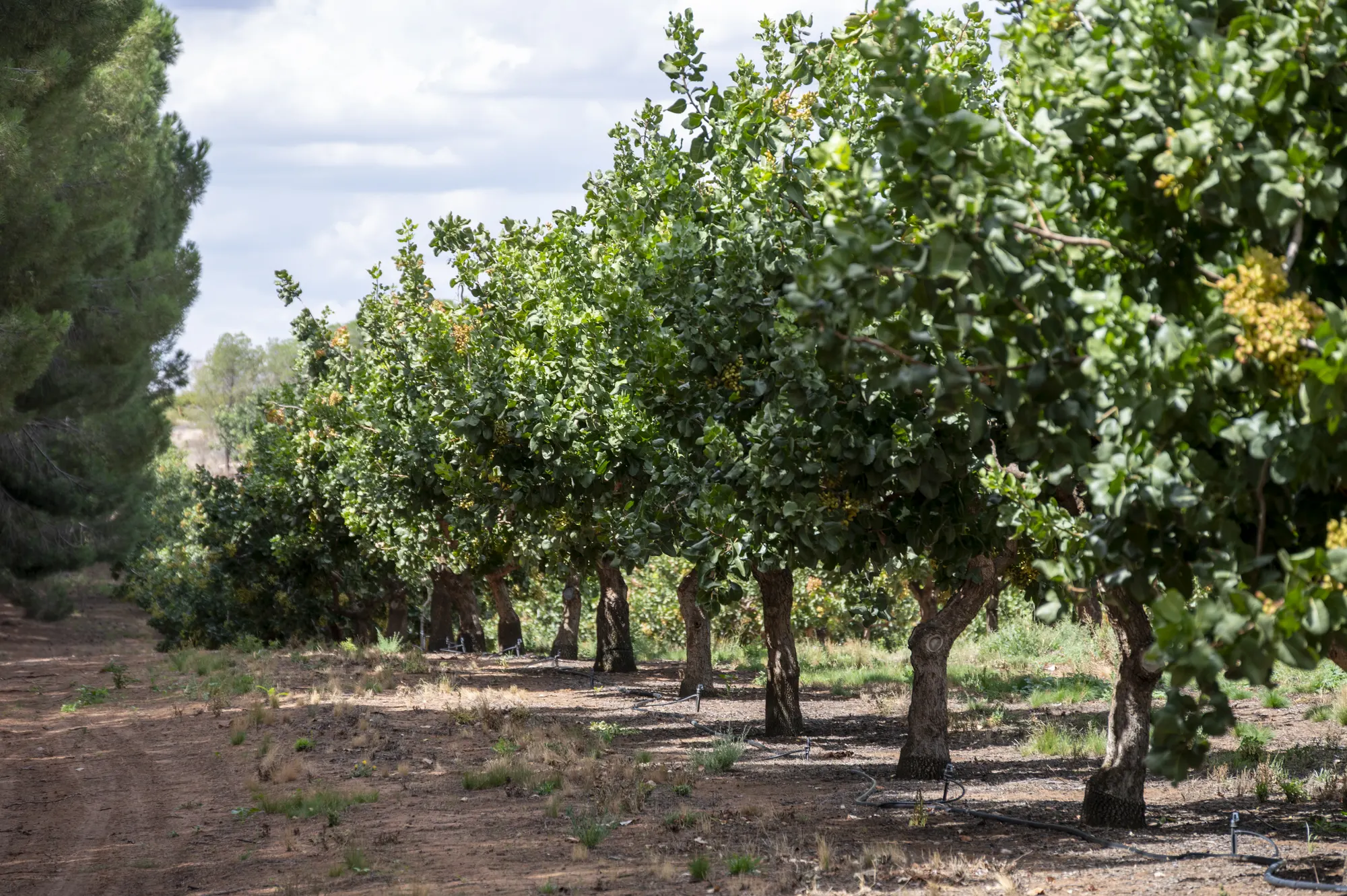
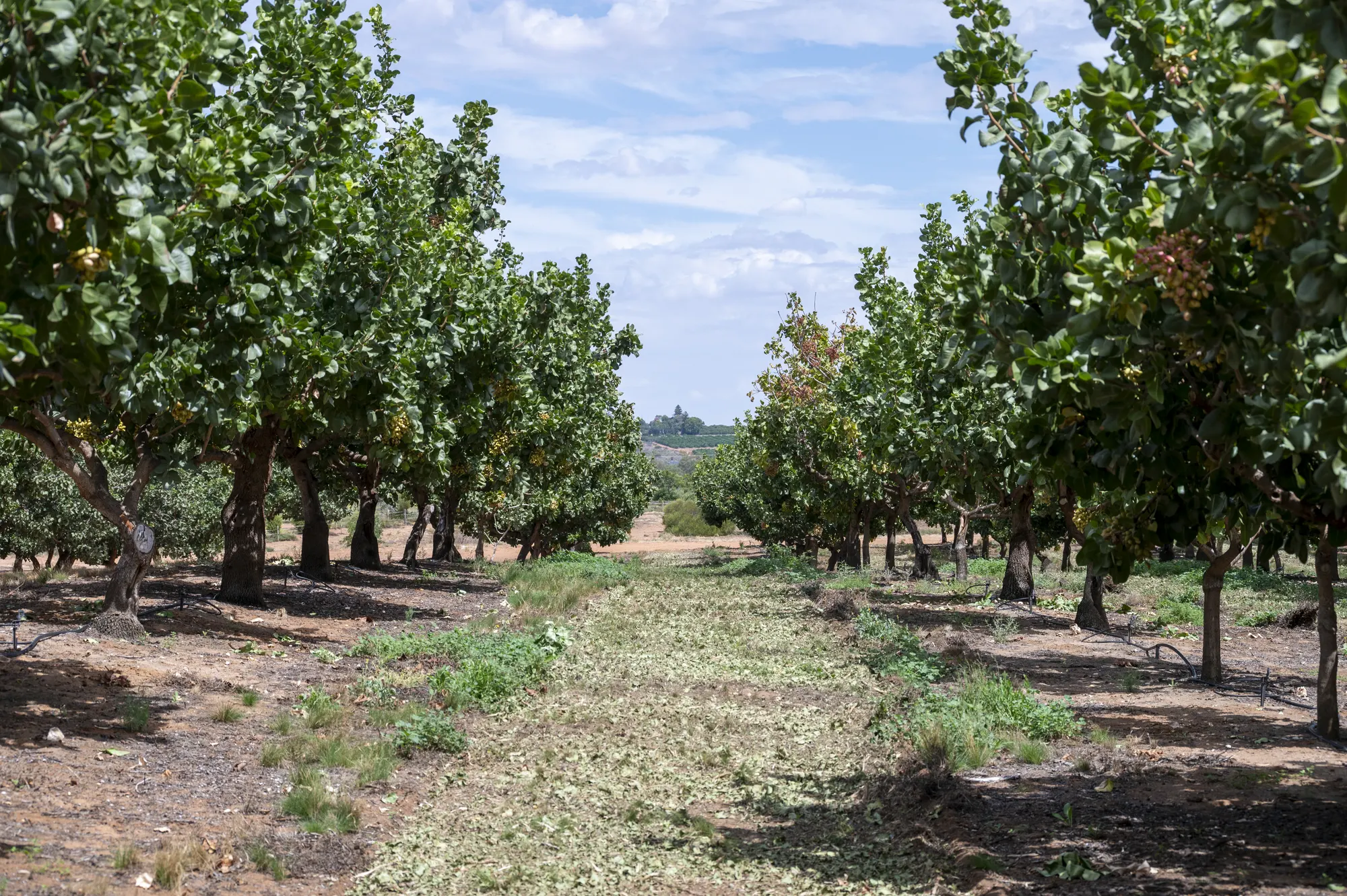
Rows of established pistachio trees with drip line along the tree row
Established pistachio rows with drip line along the tree row.
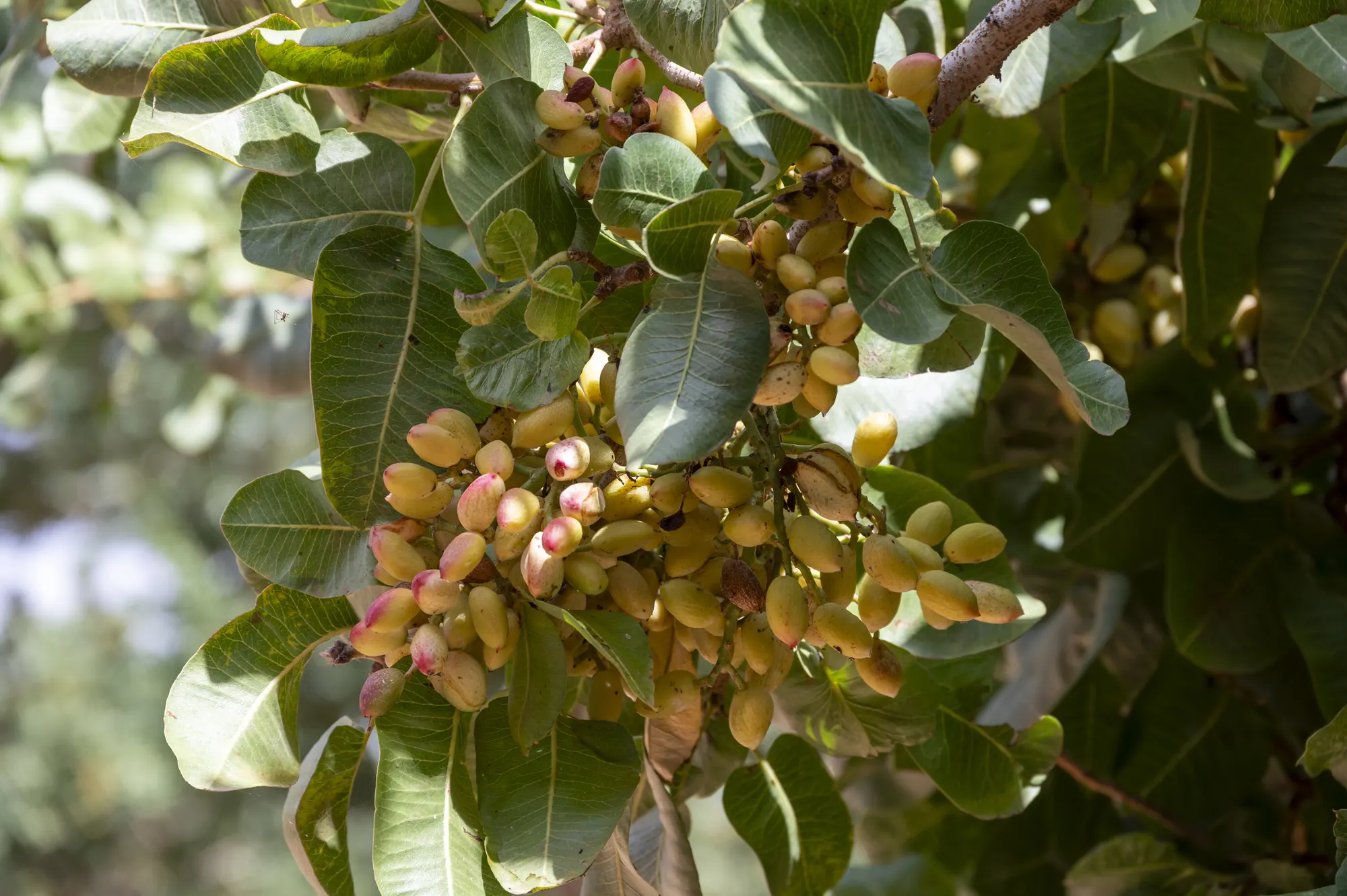
Close-up of pistachio nut clusters ripening on the branch
  1. Year 0

    Site preparation, irrigation installation, grafted trees, planting.

  2. Years 1–3

    Establishment, training, water, nutrition and labour with no commercial return.

  3. Years 4–6

    Ongoing orchard management — pruning, tree replacement, maintenance.

  4. Around year 7

    The first commercial crop harvest generally occurs around this stage. This orchard is approximately here.

  5. 10–12 years

    Industry guidance indicates full bearing may occur around this period.

Capital can be replaced. The seven years cannot.

Vendor-advised planting context: the pistachio plantings include Terebinthus and Pioneer Gold rootstocks. The female nut-producing cultivar is confirmed as Sirora. The male pollinator cultivar has not yet been separately confirmed.

Vendor-advised approximate current farm-gate indication: around $14–$15 per kilogram. This is not a guaranteed price, not a fixed contract price and not a forecast of revenue from Lot 60. Actual prices paid can differ by season, grade and quality, market conditions, and the terms of individual sale arrangements.

Timing described as industry guidance, not a projection for Lot 60. NSW DPIRD advises pistachio trees are expected to be productive around year seven, with full bearing around 10–12 years. NSW DPIRD — pistachio industry expansion. No yield, production or future income is represented for this orchard.

Establishment advantage

What would it take to start from scratch?

Indicative establishment cost: $1.2 million+

An indicative establishment comparison suggests that recreating an equivalent horticultural operation from bare horticultural land today would require more than $1.2 million in infrastructure, orchard establishment and cumulative establishment costs — excluding the purchase of the land and permanent water entitlement.

Aerial showing orchard blocks, internal roads and the scale of the surrounding land

Table olive establishment

  • Orchard preparation and planting
  • Trees
  • Row irrigation
  • Pruning and training
  • Nutrition and water
  • Labour and maintenance until commercially producing

Pistachio establishment

  • Commercial grafted trees
  • Orchard preparation and planting
  • Row irrigation
  • Replacement and mortality
  • Pruning and training
  • Water, nutrition, labour, power and maintenance
  • Approximately seven years of establishment already invested

Dedicated infrastructure supporting the operation

  • Commercial pumping infrastructure beside Big Toolunka Creek
  • Raised post-flood pump platform and civil structure
  • Mains electrical supply and controls
  • Backup generator
  • Filtration
  • Fertigation
  • Water metering
  • Mainlines and submains
  • Sprinkler irrigation and drip irrigation

Starting from bare land, or starting here.Even after spending the money, time cannot be bought back.

Actual costs vary materially with labour, contractor rates, irrigation design, tree supply, machinery, water, power, fertiliser, maintenance, tree losses and replanting, and other inputs. The figure above is an indicative comparison only. It is not a property valuation, not a precise replacement-cost claim, and not a statement of market value. The olive and pistachio establishment stories are shown separately and should not be added together with the infrastructure list as a component-by-component costing.

Infrastructure

Commercial-grade infrastructure already in place

The pumping, power, filtration and reticulation that an orchard of this scale depends on is installed and operating.

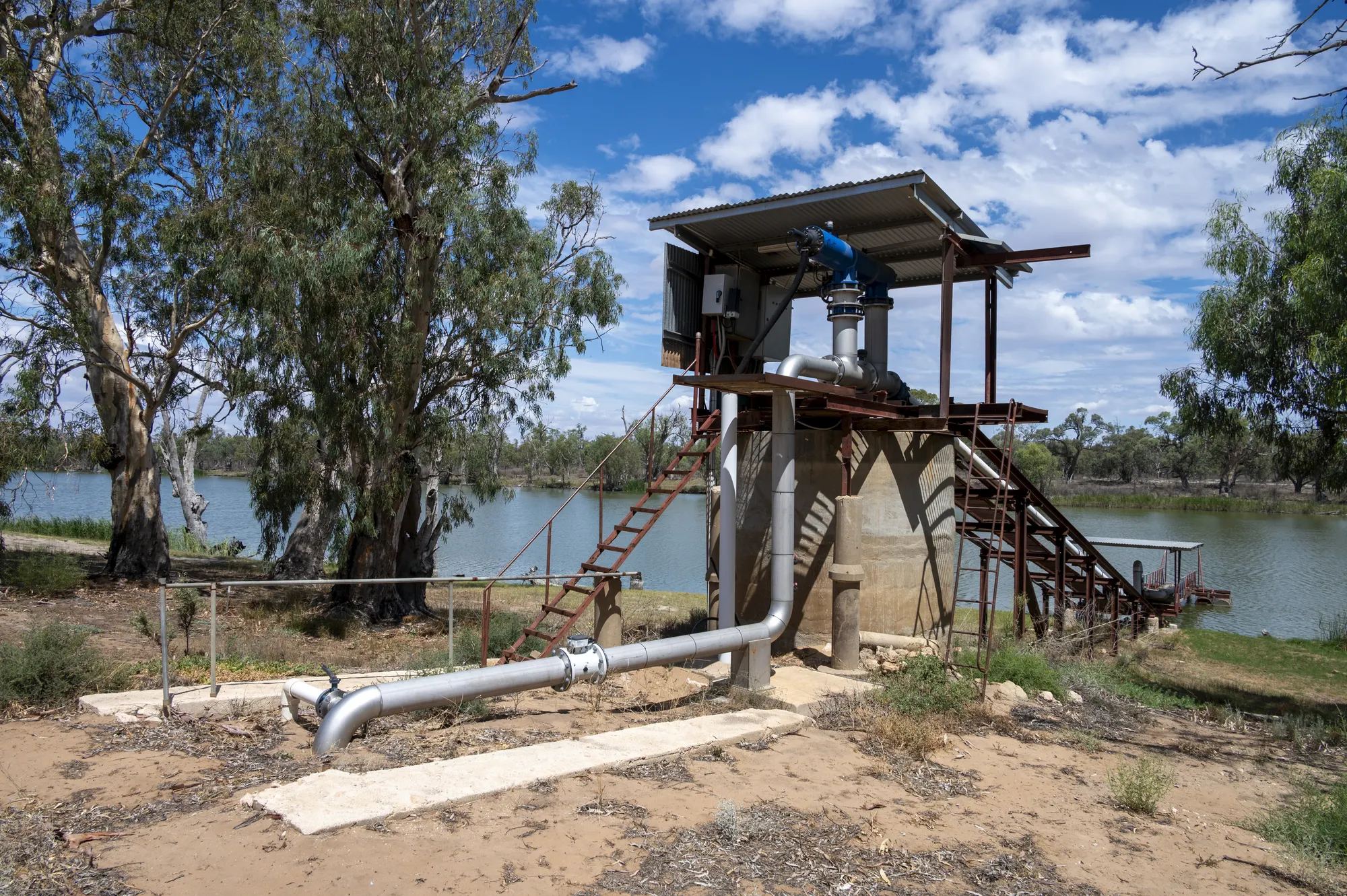
Commercial pumping station on a raised platform beside Big Toolunka Creek with steel pipeline at the water's edge
The commercial pumping station on its raised platform beside Big Toolunka Creek.
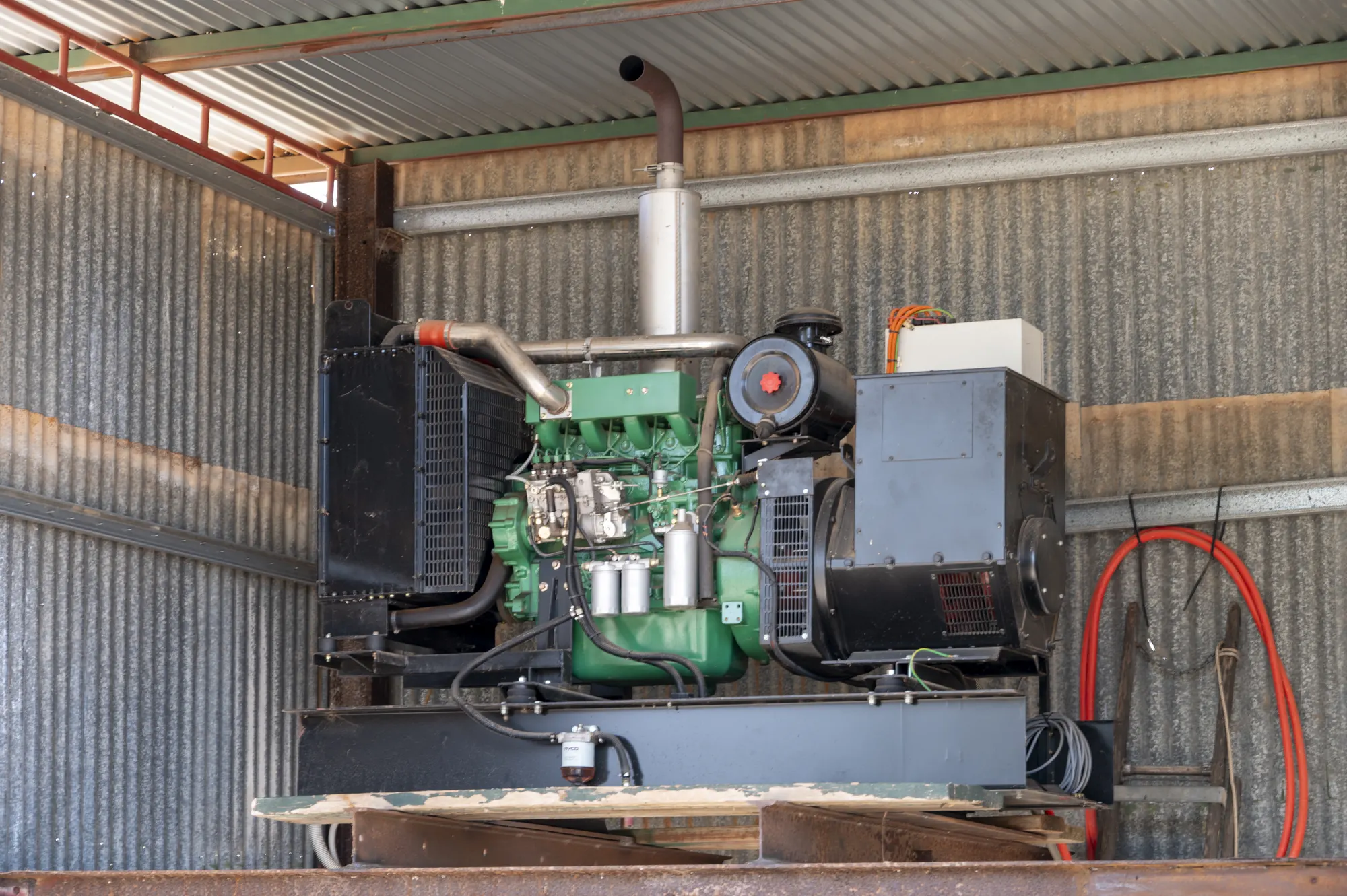
Welling & Crossley 100 kVA backup generator installed inside the on-site shed
Pump and pipework mounted under a shade roof beside Big Toolunka Creek
55 kW Grundfos pump
Commercial pumping duty for the orchard irrigation system.
Variable-speed control
Speed control on the pumping system.
Welling & Crossley 100 kVA generator
Backup generator — not the normal pumping power source.
Netafim filtration system
Filtration ahead of the mainlines and drip irrigation.
Fertigation system
Nutrition delivered through the irrigation system.
Mains electrical supply and control board
Mains power and controls on site.
Water meter
Metering included with the property.
Mainlines, submains, sprinkler and drip irrigation
Sprinkler and drip irrigation reticulation through the orchard.

Rebuilt after the 2022–23 floods

The commercial pumping station was replaced following the 2022–23 major River Murray floods and is positioned on an elevated platform above the recent flood level.

Water and access

  • The orchard pumping station draws irrigation water from Big Toolunka Creek.
  • The entrance from the River Murray into Big Toolunka Creek is approximately 600 metres from the property.
  • The vendors retain their permanent water entitlement and licence.
  • The purchaser will source water from the market.
  • The purchaser will have right of access to the existing pumping station servicing Lot 60.
  • The vendors are establishing a separate new pumping and irrigation system for the land they retain.

Detailed access, easement and water arrangements are matters for conveyancing and due diligence. Interested parties should obtain their own legal and water advice.

Who it suits

More than one way to own it

Lot 60 works as a production asset, as an expansion block for a neighbouring grower, and — with approvals — as a place to live and work.

01

Expand an existing operation

For nearby growers, additional established horticulture without the establishment years — production capacity that is already in the ground.

02

Diversify production

Add table olives and established pistachios to an existing agricultural business and spread the exposure across two crops.

03

Owner-operator and lifestyle

Approximately 5 acres of unplanted land provides flexibility for a future residence, shedding or operational improvements — strictly subject to planning, building and all other required approvals. No building entitlement is represented.

04

Agricultural investment

Established commercial olive production, an existing crop purchaser relationship, a seven-year pistachio development and substantial infrastructure in one holding.

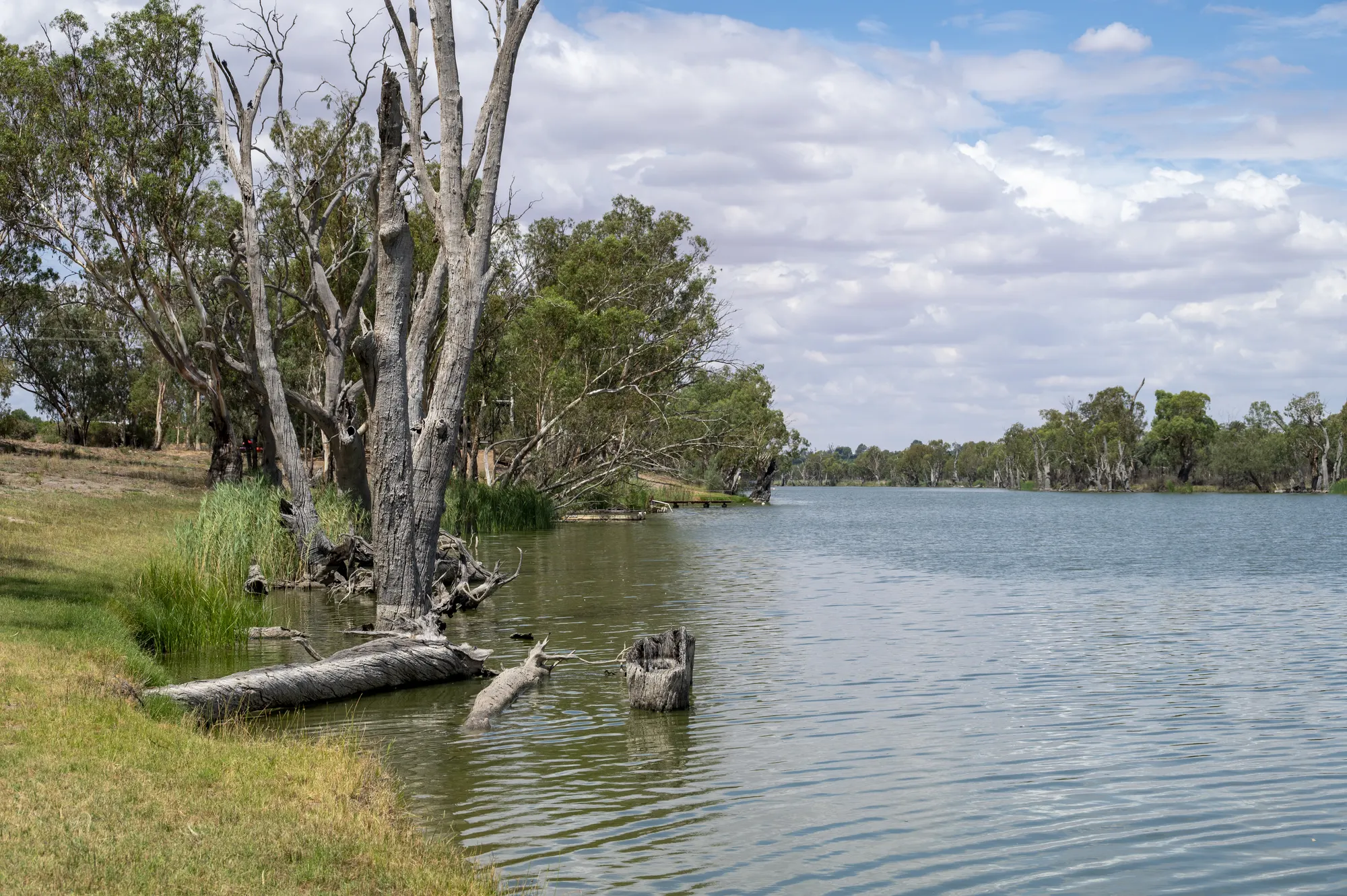
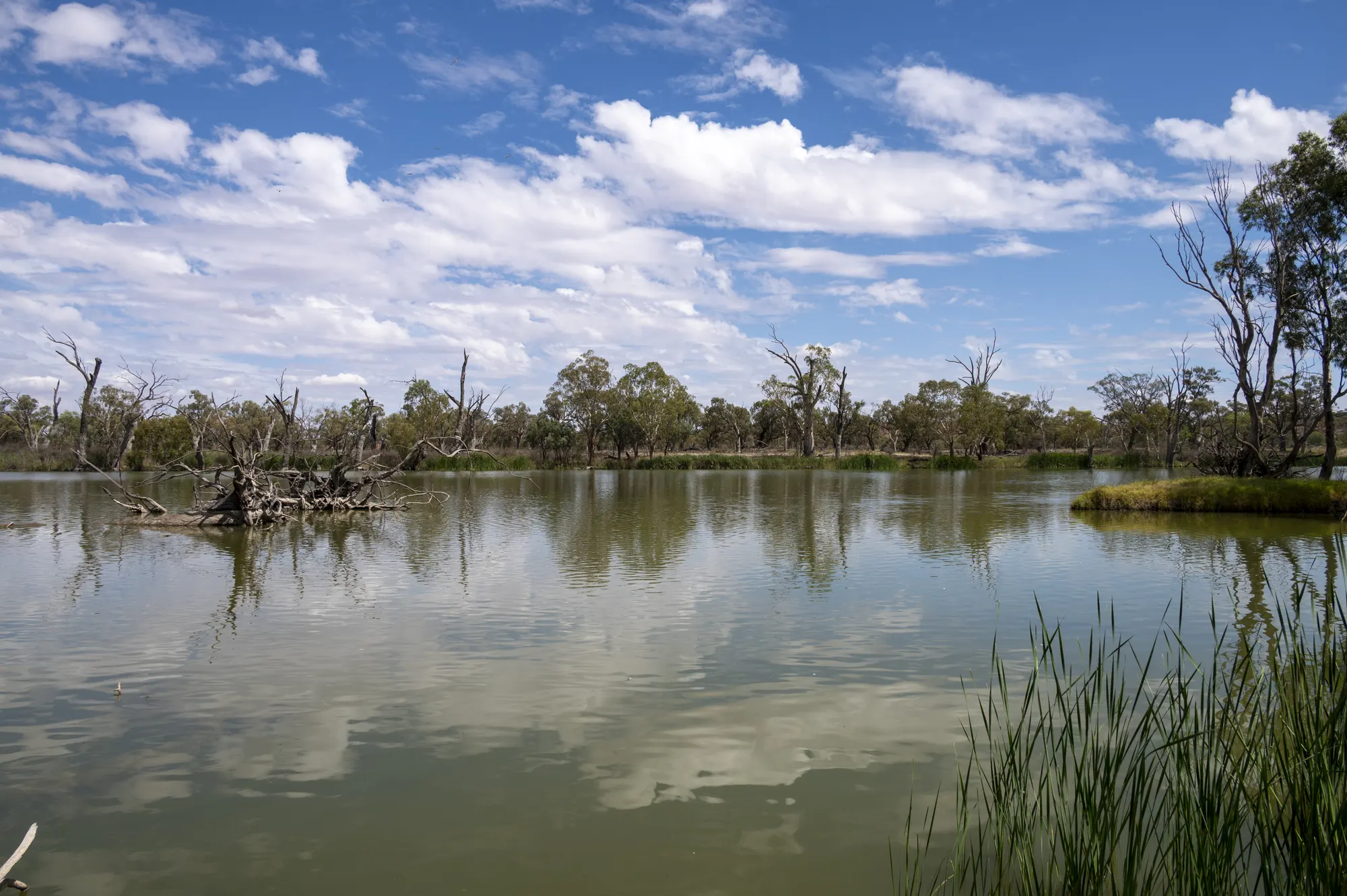
River Murray landscape with mirrored reflections of trees and cloud
The River Murray frontage — amenity alongside the working orchard, not the whole proposition.
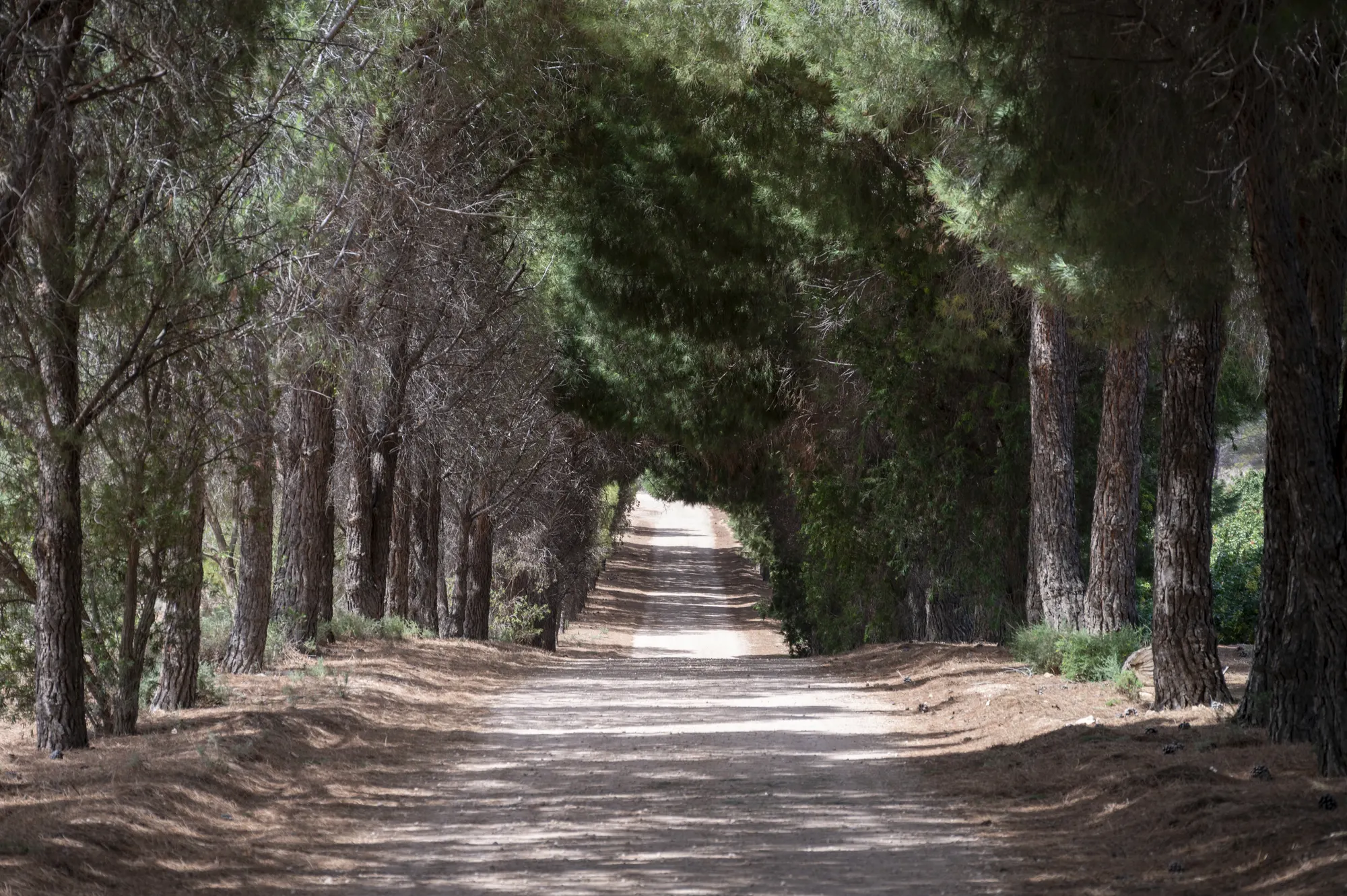
Shaded dirt track lined with mature pine shelter trees

Industry outlook

The wider market both crops sit in

Context from published industry and government sources. None of it is a forecast for this property — it is the backdrop a buyer is stepping into.

Table olives: Australia still relies heavily on imports

For the year ending June 2025, Hort Innovation records table-olive imports of 18,331 tonnes within total Australian table-olive supply of 21,330 tonnes — an Australian-supplied component of roughly 2,999 tonnes, with imports representing about 86% of supply.

Australian table-olive supply

Year ending June 2025

86%

of Australian table-olive supply came from imports in this period.

Australian table-olive supply — Year ending June 2025
ComponentTonnes
Imported supply18,331
Australian-supplied component2,999
Total supply21,330

Industry snapshot, 2024

The Australian Olive Association's 2024 snapshot puts Australian table-olive production at approximately 3,000 tonnes against approximately 17,000 tonnes of imported table olives.

Room for domestic growth

The Australian Olive Association reports that the industry sees substantial opportunity for domestic production growth, because local table-olive production has not kept pace with consumption and import demand. That is the association's position, not agent opinion.

New Australian processing

ABC Landline has reported on a new Australian table-olive processing method intended to reduce labour, water and time, and described an industry ambition to grow Australian table-olive production from around 3,000 tonnes to 100,000 tonnes over 10–15 years. That is a reported industry ambition — not a forecast of income for Lot 60.

Sources: Hort Innovation Australian Horticulture Statistics Handbook 2024/25; Australian Olive Association industry snapshot; AOA — push for domestic olive production growth; ABC News — new processing method transforms table olive flavour; AOA 2025 conference presentations.

Pistachios: a rapidly expanding Australian industry

Australian pistachio demand has grown materially, imports have historically supplemented the market, and a rapidly expanding domestic industry is now moving into greater production and export capacity. Pistachio production is biennial, so single-year figures move sharply in both directions.

Australian pistachio area planted

Hectares

Australian pistachio area planted — Hectares
PeriodHectares
2011900 ha
20243,000 ha
20253,250 ha
2030 forecast4,500 ha
Australian pistachio production

Tonnes, in-shell

Australian pistachio production — Tonnes, in-shell
PeriodTonnes, in-shell
20111,100 t
20244,400 t
2025Biennial off-year context1,800 t
2030 forecast12,000 t
Australian pistachio consumption

Tonnes, in-shell

Australian pistachio consumption — Tonnes, in-shell
PeriodTonnes, in-shell
20103,200 t
20245,500 t

Plain English

Planted area has grown from 900 hectares in 2011 to 3,250 hectares in 2025, with industry forecasting 4,500 hectares by 2030. Consumption rose from 3,200 tonnes in-shell in 2010 to 5,500 tonnes in 2024. Industry expects domestic production to exceed domestic consumption as new orchards mature, opening export opportunity.

Where Lot 60 sits

Hort Innovation describes productive tree area increasing rapidly and an industry entering a period of strong growth. The Pistachio Growers' Association points to expanding plantings, grower diversification interest and the Murray River Valley as a core production region — which is where this property is.

Sources: Pistachio Growers' Association / ANIC — Australian Nut Industry booklet, Aug 2025; Hort Innovation project PS23001; Pistachio Growers' Association — the Australian industry. Industry data is provided as market context only and is not a representation about the production or income of this property.

Survey & plan

Approved boundary re-alignment, stamped 14 August 2026

Planning Consent and Land Division Consent have been granted for the boundary realignment. The final plan is now in for formal sign-off.

Council-stamped plan supplied by the vendor — Development Application 26011906.

Development application
26011906
Consents granted
Planning Consent and Land Division Consent granted 14 August 2026 for the boundary realignment.
Current status
The final plan is now in for formal sign-off. The owners advise this is expected to be completed before settlement.

Final title has not yet issued. Distances and areas shown on the plan are subject to change upon completion of certified survey. Interested parties should obtain their own legal and planning advice and rely on the certified documents rather than this marketing page.

Media

The property on film, and independent industry coverage

Avenue between rows of mature table olive trees

Independent industry coverage — ABC Landline

Australia's table-olive industry and new processing methods

This Taylorville operation appears in ABC Landline's report on Australia's table-olive industry and new processing methods.

Watch on ABC Landline

Relevant section 41:00–52:59.

Pistachio trees in row with developing nut clusters in the canopy

Independent industry coverage — ABC News

Australian innovation to boost olive flavour, improve efficiency

A short ABC News (Australia) report on the new Australian olive processing approach.

Watch the ABC News report

Images shown with these references are our own photographs of the property. ABC content is linked to its official pages only and is not reproduced, hosted or edited here. No endorsement of this sale by the ABC is implied.

Why the owners are selling

A genuine retirement sale.

After decades in horticulture, the long-standing owner has reached the stage where it is time to step back from the demands of operating the property and enjoy a simpler retirement.

River Murray bank with mature gum trees and open water

Key buyer questions

Why are the owners selling?
It is a genuine retirement sale. After decades in horticulture, the long-standing owner is stepping back from the workload of operating the property.
What makes the table olives different?
They are an established commercial producing crop. Most of the current crop is marketed through the Sydney and Brisbane wholesale markets. UniSA has indicated it is willing to enter into a long-term purchase contract for table olives from this property, subject to agreed commercial terms and documentation. UniSA is also meeting with and approaching other growers about expanding table-olive production under long-term supply arrangements.
Why do seven-year-old pistachios matter?
Around seven years of orchard establishment has already been completed. Industry guidance indicates the first commercial crop harvest generally occurs around year seven, with full bearing around 10 to 12 years.
What does the $1.2 million+ establishment comparison mean?
It is an indicative comparison of what recreating an equivalent operation from bare horticultural land would require in infrastructure, orchard establishment and cumulative establishment costs — excluding land and permanent water entitlement. It is not a valuation and not a market-value statement.
What could the approximately 5 acres of unplanted land offer?
Flexibility — further planting, shedding, operational improvements or a future residence. Any such use is strictly subject to planning, building and all other required approvals, and no building entitlement is represented.
Aerial view of the river channel, sandy banks and river red gums with farmland behind

Contact

Speak directly with Clinton Barker

Inspections by appointment. For the full information memorandum, detailed financial information, planning documents and access arrangements, call or email — you will be speaking with the agent handling the campaign.

For Sale by Expression of Interest

Agent
Clinton Barker
Clinton Barker Property · RLA 337786

Send an enquiry

Prefer to write? Send your details and Clinton will contact you shortly.